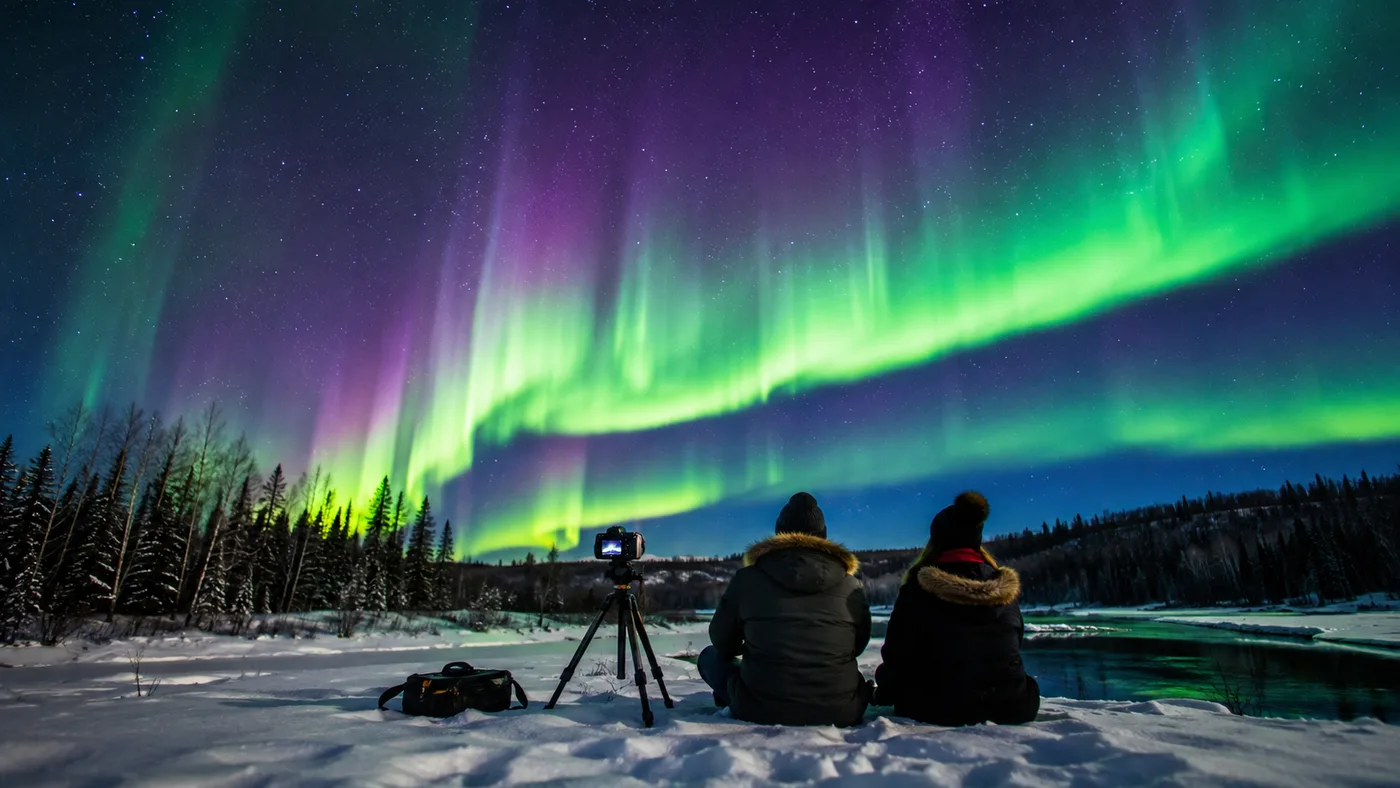
Fairbanks Northern Lights Viewing & Photography Guide
My first night out on Murphy Dome, the thermometer on the rental car dash read minus eighteen. I stood outside in oversized snow boots, shivering while wondering how to see the northern lights in fairbanks without losing feeling in all ten toes. Then the northern sky turned a faint smoky white, twisted like a silk scarf, and flared into ribbons of neon violet and emerald. Standing beneath that immense curtain makes you forget the biting chill completely.
Fairbanks sits directly under the Auroral Oval, an atmospheric sweet spot that turns this Interior city into one of the most reliable places on earth for night sky displays. In this guide, I will share the unvarnished realities of chasing the lights here: where to drive, camera settings that actually work, how many nights you really need, and the little packing tricks that keep your batteries from dying thirty seconds after you open the shutter.
Book your fairbanks northern lights experience:
Understanding Fairbanks Aurora Odds and Timing
People often ask if seeing the aurora borealis in Alaska is guaranteed on a short weekend getaway. Honestly, no trip to the subarctic comes with an absolute guarantee. Nature does what it wants. Fairbanks Alaska northern lights success rate figures often float around ninety percent, but there is an important caveat attached to that number: it requires staying at least three or four active nights and actually heading out away from downtown glare.
If you wonder how many days in fairbanks to see northern lights reliably, four nights is my personal sweet spot. One night might be totally clouded over by an unexpected front pushing past the Alaska Range. Another might bring zero solar wind activity. On the third or fourth night, though, the sky usually tears open. How often are the northern lights visible in Alaska during peak season? In Fairbanks, scientists record displays on roughly 240 nights per calendar year, spanning from August 21 through April 21.
Checking the local geophysical data before stepping into your boots makes a world of difference. Before driving out, I always monitor the Fairbanks Northern Lights Forecast and Aurora Tracker to evaluate solar wind speed and geomagnetic storm alerts. Auroras in Alaska happen high up in the ionosphere, triggered when charged solar particles slam into atmospheric gases. Oxygen produces that unmistakable Alaska green sky at lower altitudes around sixty miles up, while rarer nitrogen collisions create deep red northern lights in Alaska higher up at two hundred miles.
Pro tip: If the sky looks milky white or grey to your naked eye, point your smartphone camera at it on night mode; digital sensors pick up green wavelengths long before human eyes adjust.
Prime Viewing Spots Around Fairbanks
Light pollution in downtown Fairbanks is bright enough to wash out moderate auroral activity. To witness the true brilliance of the night sky in Alaska, you need to drive twenty to forty-five minutes out of town. Elevation helps too, since cold air settles heavily into river valleys, creating persistent ground fog and ice crystals that obscure the stars.
Murphy Dome sits roughly twenty-five miles northwest of town at an elevation of nearly three thousand feet. It was used as an Air Force radar station during the Cold War. Today, the windswept summit gives you an unbroken 360-degree horizon. Bring heavy windproof gear because the gusts up there will drop the wind chill by twenty degrees within seconds. Another solid option is Cleary Summit, perched twenty miles northeast along the Steese Highway. You will share the pullouts with fellow aurora hunters, yet the northern view over the old gold mining valleys is spectacular.
Here are several practical spots to park your vehicle and wait for the show:
- Murphy Dome Summit: Highest accessible road point near town with zero obstructions, though severe crosswinds can shake tripods violently.
- Cleary Summit pullout: Easy access right off the Steese Highway with elevated northern exposure, located roughly 35 minutes from downtown.
- Chena Lakes Recreation Area: Flat, frozen lake expanse twenty miles southeast in North Pole, offering broad open ice and reflecting surfaces when lakes freeze clear.
- Haystack Mountain Trailhead: Quiet pullout off the Elliott Highway around milepost 11, rarely visited by commercial tour buses.
Note: Rental car agencies in Fairbanks frequently track unpaved highways; confirm whether your agreement permits driving up the Elliott or Steese highways during winter conditions.
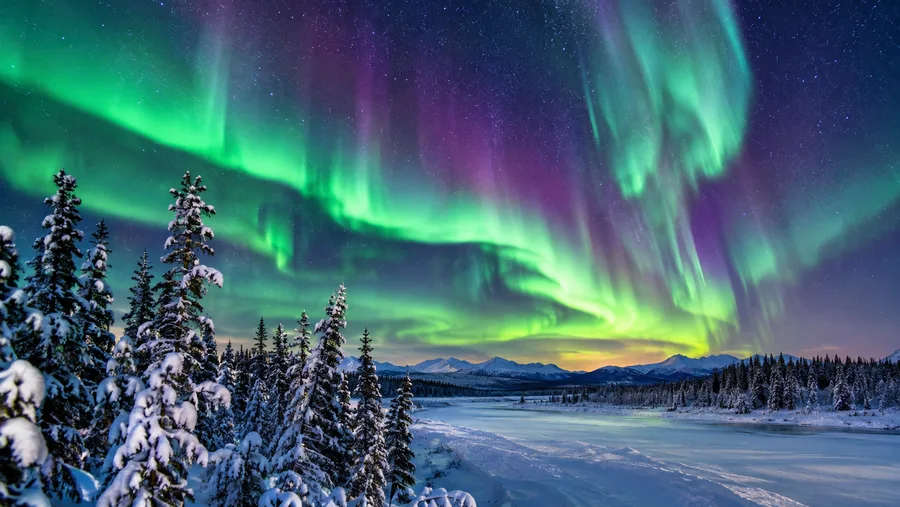
Recommended Viewing Vantage Points Compared
Different viewing locations suit different comfort levels and vehicle setups. Here is how the top spots around town compare when you are planning an independent evening chase.
| Location | Distance from Town | Elevation | Winds / Exposure | Road Condition |
|---|---|---|---|---|
| Murphy Dome | 25 miles northwest | 2,930 ft | High wind exposure | Paved then hard packed snow |
| Cleary Summit | 20 miles northeast | 2,233 ft | Moderate breezes | Paved Steese Highway |
| Chena Lake Recreation Area | 17 miles southeast | 490 ft | Sheltered, colder valley air | Paved access roads |
| Ester Dome | 11 miles west | 2,360 ft | Moderate exposure | Narrow, steep curves |
If you prefer a hot soak while the green ribbons swirl overhead, you can head fifty-six miles east toward Chena Hot Springs. The thermal water keeps you warm, though the steam can occasionally fog camera lenses if the wind drifts your way.
Book your fairbanks northern lights experience:
Dialing in Camera Settings for Northern Lights Photography in Fairbanks
Photographing the aurora lights in Alaska is where many travelers encounter massive frustration. Cold weather drains lithium batteries in twenty minutes. Metal tripods freeze your fingers through thin gloves. You tap your autofocus button, but the camera hunts back and forth across an pitch-black void because it has nothing solid to grab.
Before leaving your warm hotel room, switch your camera lens to manual focus. Find a bright star, or a distant radio tower light on the ridge, and zoom in with your rear LCD screen to set critical focus until that point of light turns razor-sharp. Once set, tape the focus ring down using gaffer tape so it never shifts in the dark.
A typical baseline exposure for northern lights pictures in Alaska looks like this:
- Manual focus: Locked precisely to infinity on a distant celestial object or far-off ridge marker.
- Aperture setting: Widest possible setting your glass allows, ideally f/1.4, f/2.0, or f/2.8 to pull in every scrap of available starlight.
- ISO baseline: Start around ISO 1600 on bright nights; bump up to ISO 3200 or 6400 if the curtains move quickly or faint.
- Shutter speed: Between 3 and 8 seconds for fast, dynamic ribbons; stretch to 12 or 15 seconds only if the green arc is static and sluggish.
- Shutter release delay: Set a 2-second countdown timer or use a remote trigger so pressing the shutter button does not blur your shot.
Timing matters just as much as camera gear. Planning your trip around the astronomical calendar pays off, so consider checking our guide on the Best Time to See the Northern Lights in Fairbanks before locking in non-refundable airline reservations. Equinox periods in late September and late March often yield stronger geomagnetic storms thanks to the Russell-McPherron effect, when Earth's magnetic field aligns neatly with the incoming solar stream.
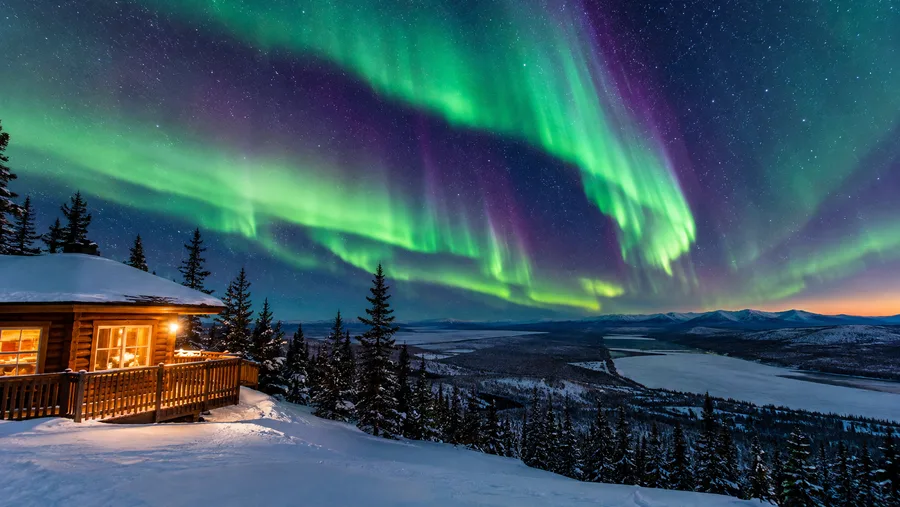
Cold Weather Protocol and Gear Essentials
Temperatures around Interior Alaska drop past minus thirty degrees between December and February. At those numbers, physics behaves differently. Plastic cables turn brittle and snap like uncooked spaghetti. LCD screens on digital cameras lag visibly, responding to inputs as if submerged in molasses.
Keep your spare batteries tucked inside an interior jacket pocket where body heat keeps the chemicals responsive. Swap them out the instant your battery meter drops one bar. When you finish shooting and head inside your warm cabin or vehicle, seal your entire camera rig inside an airtight zip-top plastic freezer bag before crossing the threshold. Condensation will form on the outside of the plastic bag rather than coating your delicate internal sensors and cold glass elements with a thick layer of moisture.
Dress in deliberate layers. Wool base layers against your skin, a heavy fleece or wool sweater mid-layer, windproof snow pants, and an expedition-grade down parka on top. Skip tight shoes; you need warm air circulation around your feet inside thick wool socks, or your toes will turn numb in fifteen minutes flat.
Frequently Asked Questions about how to see the northern lights in fairbanks
What time of night do the northern lights usually appear in Fairbanks?
The prime window runs between 10:00 PM and 3:00 AM, with peak activity frequently clustering around magnetic midnight, which occurs near 1:30 AM in Fairbanks.
Can you see the aurora borealis from inside a downtown Fairbanks hotel?
You can occasionally catch unusually violent solar storms from a downtown window, but streetlights and parking lot lamps severely wash out faint ribbons. Driving fifteen to twenty miles outside city limits yields dramatically better contrast.
Can an iPhone or modern smartphone capture pictures of the aurora?
Yes. Newer iPhones and Android phones equipped with night mode take surprisingly sharp handheld aurora photos during moderate to strong displays. For best results, mount the phone on a small tripod and run a 3 to 10-second exposure.
Quick Reference
- Best season: August 21 to April 21
- Optimal trip duration: minimum 4 nights
- Peak viewing hours: 10:00 PM to 3:00 AM
- Ideal camera lens: wide angle with f/2.8 or faster
Book your fairbanks northern lights experience:
Before You Go
Chasing the lights in central Alaska takes patience, warm socks, and a willing attitude to sacrifice several consecutive nights of sleep. Pack extra hand warmers, rent a vehicle with high clearance and decent winter tires, and keep looking up whenever clear skies reveal the stars above Fairbanks.
Read more about fairbanks northern lights.